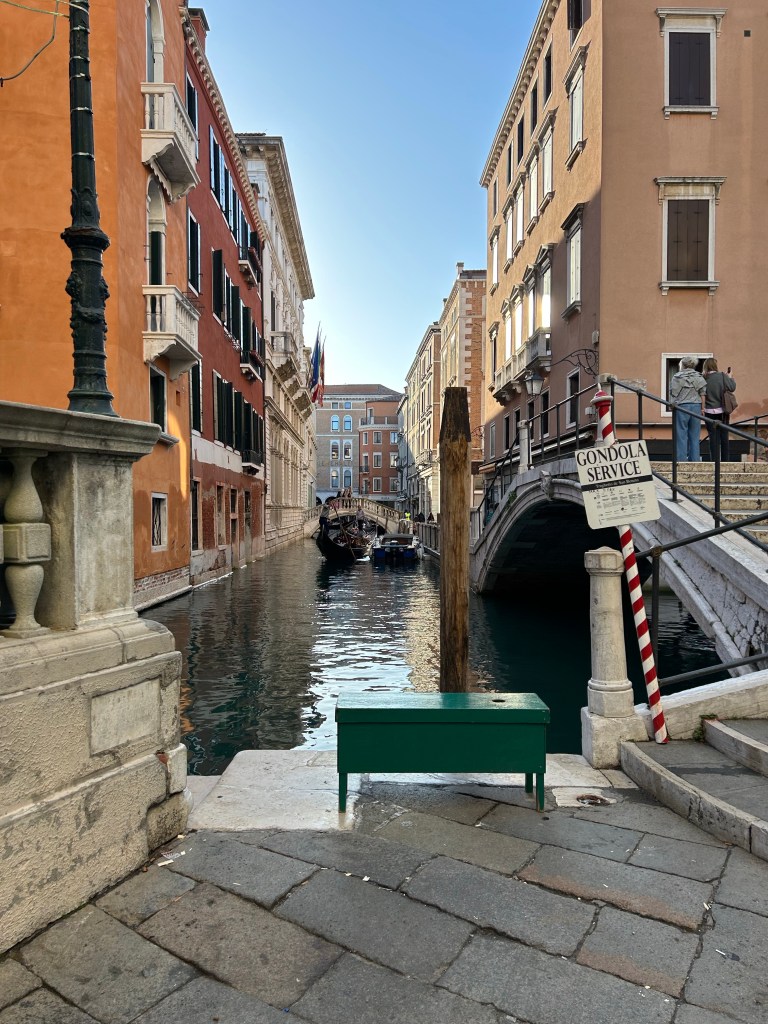
Introduzione: Benvenuti nella serie “I Segreti di Venezia”, un’immersione nel cuore della città delle acque, alla scoperta delle sue meraviglie nascoste e dei suoi segreti. In ogni articolo, sveleremo un aspetto unico di Venezia che la rende affascinante e misteriosa. Oggi, vi voglio incuriosire con uno dei rarissimi esempi di “Ponte a tre Ponti”, proprio come dice il nome infatti si tratta di un ponte davvero particolare, una vera perla dell’architettura veneziana, lo avete mai attraversato?
Lo scopo: Questa architettura è stata eretta per collegare 3 rive distinte separate dallo stesso specchio d’acqua; è realizzata in mattoni e conta tre arcate distinte. Questa caratteristica da sola lo renderebbe una notevole opera di ingegneria.
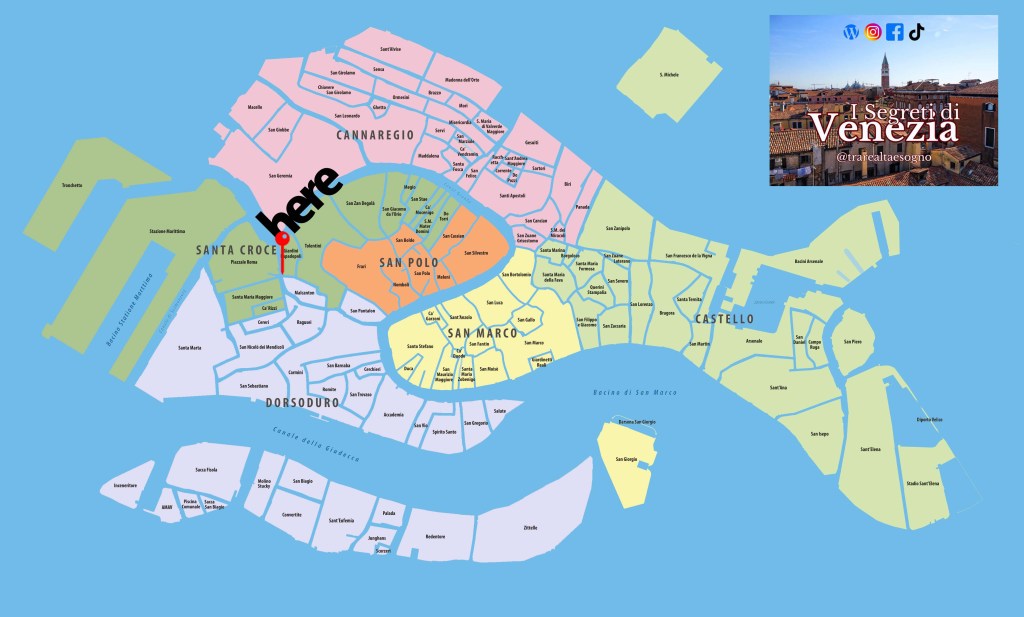
Il Ponte Tre Ponti nelle vicinanze di Piazzale Roma
Tuttavia, ciò che lo rende veramente unico è l’aggiunta successiva di altri tre ponti, di cui due in legno. Questa estensione ha portato il numero di sponde collegate nello stesso luogo a ben cinque. Questo atto di ingegneria è un esempio della continuaevoluzione delle strutture veneziane in risposta alle mutevoli esigenze della città nei secoli e nella modernità.
La storia del Ponte a Tre Ponti è avvincente e merita di essere raccontata. La sua costruzione e i motivi che hanno portato a questa soluzione architettonica sono una testimonianza dell’ingegno e dell’abilità degli architetti e degli ingegneri veneziani del passato, i quali non si sono mai spaventati nel dover cercare soluzioni ingegnose per risolvere i problemi di connessione cittadina.
Inoltre, questo ponte ha una posizione di rilievo nella città di Venezia, svolgendo un ruolo importante, pari a quello di una rotatoria, nel collegare le vie d’accesso a diverse zone cittadine. È un punto di passaggio fondamentale e offre una vista panoramica straordinaria di una Venezia locale e meno commerciale, rendendolo un luogo di incontro e di contemplazione.
Nel corso degli anni, il Ponte a Tre Ponti ha acquisito un significato simbolico unico ed è divenuto emblema di connessione, di adattamento e di resilienza, riflettendo il carattere e la storia di Venezia stessa.
In futuro, continueremo a esplorare i segreti e le meraviglie di questa città straordinaria. Grazie per essere con noi in questa affascinante avventura nella serie “I Segreti di Venezia”. Restate sintonizzati per ulteriori rivelazioni e scoperte.
Introduzione: Benvenuti nella serie “I Segreti di Venezia”, un’immersione nel cuore della città delle acque, alla scoperta delle sue meraviglie nascoste. In ogni articolo, sveleremo un aspetto unico di Venezia che la rende affascinante e misteriosa. Oggi, risponderemo a una delle domande più intriganti: perché le gondole veneziane possono navigare dritte con un solo gondoliere al remo?
Il Segreto delle Gondole: La risposta è più semplice di quanto si possa immaginare. Le gondole sono state progettate con una forma asimmetrica appositamente per consentire a un singolo gondoliere di mantenerle in linea durante la navigazione.
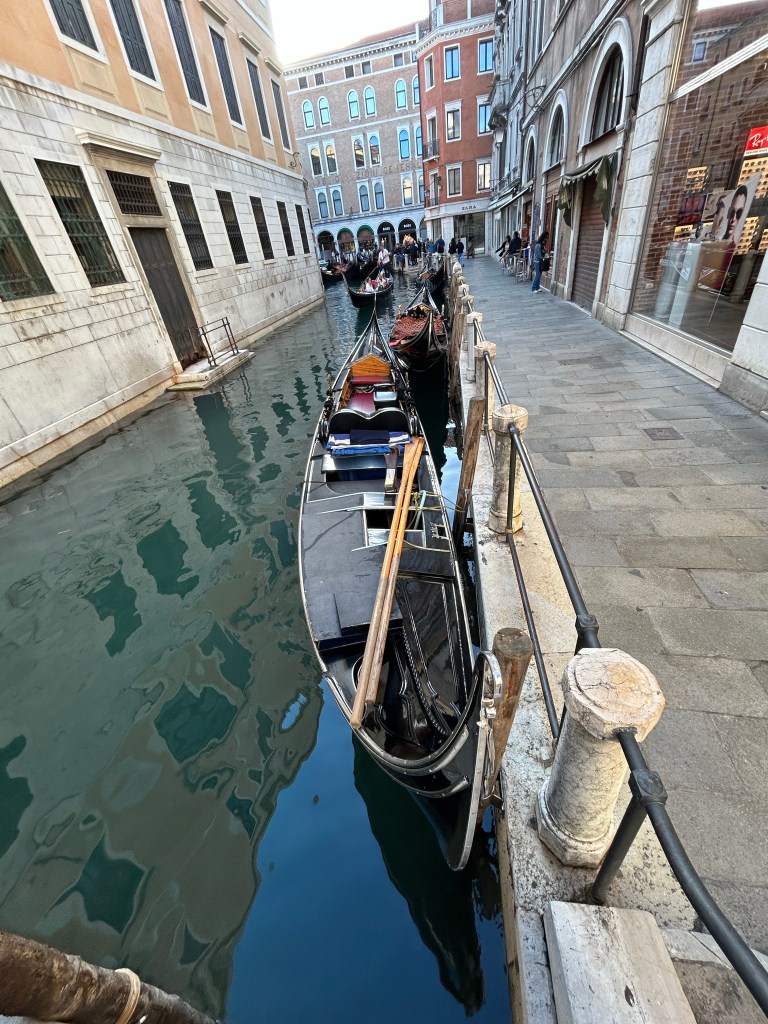
L’asimmetria percepibile anche dall’alto
Questo design unico, affinato nel corso dei secoli, è il risultato di studi e ricerche che hanno reso possibile l’uso di una sola persona per governare questa elegante imbarcazione.
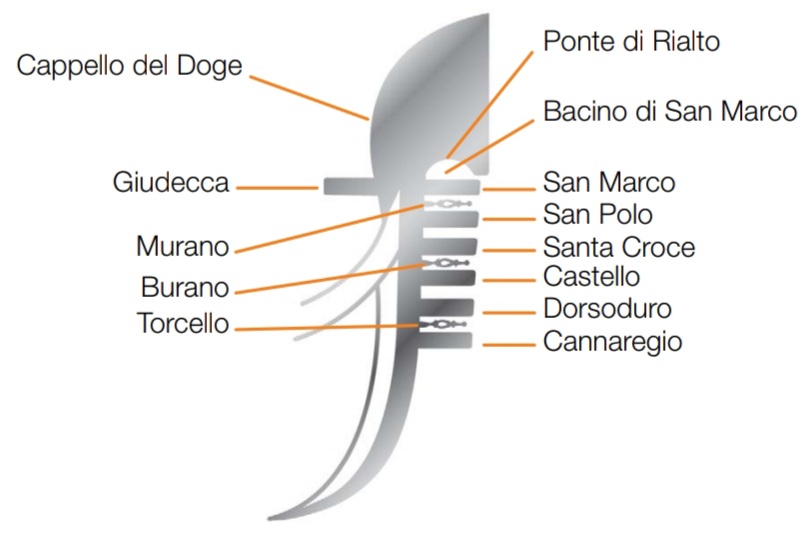
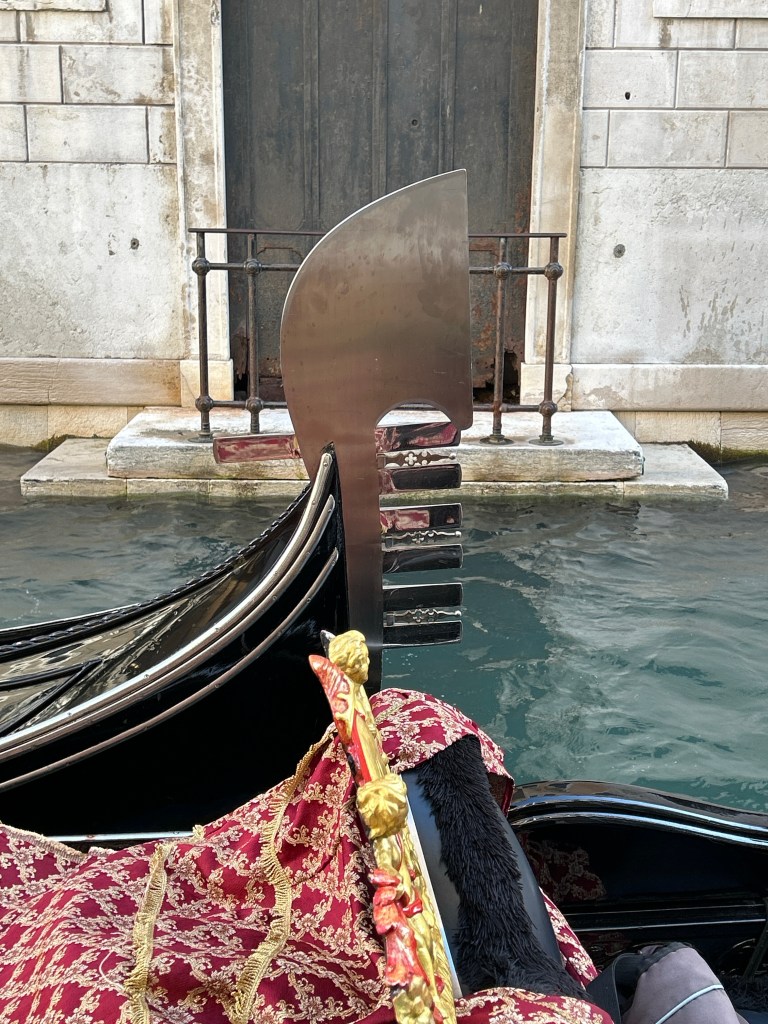
Il Ruolo del “Dolfin”: Per migliorare ulteriormente l’assetto, l’equilibrio e il controllo della direzione, le gondole sono dotate del caratteristico “Dolfin“. Questo elemento, situato all’estremità anteriore della barca, non solo contribuisce alla stabilità ma svolge anche un ruolo simbolico, rappresentando la città di Venezia e i suoi principali sestieri e elementi acquei.
Copyright itinerariovenezia.com
Concludiamo così questa prima esplorazione dei segreti di Venezia, che ci ha permesso di gettare uno sguardo dietro le quinte di questa città unica al mondo. Venezia, con la sua storia avvincente e le tradizioni affascinanti, continua a catturare il cuore di chiunque la visiti.
Tourism to unusual places in Italy is opening up new frontiers and opportunities that were once unthinkable for some areas where tourism itself was only a microscopic niche of the local economy.
The big bang of online content dissemination began with the maximization of online content, starting from simple selfies, through specialized blogs, to videos on YouTube and much more, because with a bit of Google and patience, we can get anywhere. We are all involved in a virtual competition that mostly leads us to reveal to our universe of followers the most special places we visit, those treasures that our peninsula knows how to better preserve than many other corners of the globe, and that each of us is proud to have been able to discover.
And yet, as a consequence of such an innocent movement, the outcry grows against too frivolous and unscrupulous tourism that often engages in deplorable behavior towards the environment, disrespectful of the visited place, or worse, towards its inhabitants. All perhaps just to frame oneself in a selfie that can offer half a second of vanity in a whirlwind of virtual hearts.
There is no currency that can repay the damage caused to an ecosystem, whether natural or economic, let alone repay it in “likes.”
So what can we do? Do we arm ourselves with shotguns and protect our lands? Do we take boats and guard the seas and lagoons deploying artillery? Absolutely not!
The solution to obtain common sense from others, I believe, is to appear endowed with common sense to those from whom we demand it.
And for logistical problems, as residents, we must hang on and pull the jackets of the powerful, so that the means of transportation are fair and efficient both for residents and tourists, because one can benefit from the other by finding the right balance (a very strong theme in Pellestrina every year, by the way).
Let’s always remember that the value of a destination is made up of two fundamental factors:
What do I offer?
Who is looking for what I offer? Without these two ingredients, the discussion cannot even begin.
Who is a tourist? It is a traveler driven by leisure or cultural interests towards the places they visit. (source: Treccani.it)
But at this point, do we really know who and what a tourist seeks from a destination? On the flip side, who knows what the destination itself (meaning the territory and population as a whole) expects from the tourist?
Before we go, here’s a list of simple rules that any tourist with a heart should follow:
Remember that a vacation is also a moment of comparison with a different culture. Try to adapt to local customs and habits without imposing your own habits and lifestyles. Being a guest does not mean being the host.
Be decent, from manners to clothing, especially if you will visit places of worship; support local micro-enterprises and discover local crafts or cuisine, you will bring home the real treasures of that country. Be honest and show gratitude.
The place you visit is not your city, but it is part of your same planet. Respect.
Open yourself to the universe you are discovering, interact with the locals, they are the best advisers. Discover their habits, rhythms and life from a new perspective, theirs. Empathize with the residents.
Garbage can be managed well, do not make the traces of your passage barbaric, the garbage is yours until you find a bin. Cleanliness of the ecosystem.
Children can have fun, but call them back when they exaggerate; smoking can be enjoyed, but only if it does not harm others and where permitted, dogs are wonderful, but someone may be afraid of them, remember that. Think about others.
Something may not please you, but it is not always someone’s fault, let’s laugh about it. Keep calm.
The road is not always wide, if you are many, try to line up in the narrowest passages or along the sidewalks. Giving way has never killed anyone.
Prefer local transportation and accommodation activities, they are genuine experiences. Authenticity.
Be honest in your reviews, if a fly disturbs your meal or a waiter appears in your selfie, it does not mean that the place is dirty or the people are rude. Many businesses depend on that damn thumb that, like a sword of Damocles, determines the choices of customers. Honesty.
Your music and voice are undoubtedly beautiful, but moderate the volume. You may like it, but others may not.
Your photos will be beautiful, but the landscape belongs to everyone, take the necessary time without abusing it. Altruism.
Every step contains history, do not steal pieces of the country for your living room window. Protect the discovered treasures.
If something did not please you, if something can and should be improved, let it be known, after all, all municipalities have an email in 2020. Help residents in just battles.
On the return, reflect on the luck you had in discovering so many new things. Authenticity