Eccoci, abbiamo affrontato11tappe e ci siamo tenuti compagnia al ritmo delle rime che abbiamo letto insieme.
Viaggiare con Voi in questo universo è stato meraviglioso! Spero di avervi incuriosito, aiutato e, perchè no, ispirato.
CLICCA QUI SOPRA
Rompiamo gli indugi ora, finalmente (e senza sostenere alcuna prova finale) potete scaricare il PDF contenente l’intero corso di poesia by Trarealtaesogno.
Si tratta di un vero corso di scrittura poetico che potrete stampare, condividere, sottolineare, leggere e poi rileggere, tutte le volte che vorrete.
Vi chiedo di avvisarmi qualora ci fossero degli errori o dei problemi ad esso collegati.
Ricordate, nel condividerlo o riutilizzandolo che ho espresso i termini e le condizioni per farlo secondo questo tipo di licenza: Questo freebie è concesso in licenza sotto Creative Commons BY-NC-SA 4.02023 (come peraltro citato all’interno del file stesso).
Carissimi, desidero innanzitutto esprimere la mia profonda gratitudine per avermi concesso l’onore di essere vostro cicerone in questo straordinario viaggio poetico. Il vostro interesse, la vostra passione e la vostra dedizione a esplorare il mondo della poesia con me sono stati il motore di questo corso. Ogni vostra interazione, ogni momento condiviso ha reso questa esperienza incredibilmente speciale.
Come autore, sono fermamente convinto che la poesia sia una forza trasformatrice. Continuerà a guidare i vostri passi e a svelare i vostri sentimenti più profondi. Ora, mentre concludiamo questo corso, non è una fine, ma un nuovo inizio. Siate audaci nel vostro percorso poetico, siate curiosi, siate veri. La vostra voce è unica e merita di essere ascoltata.
Vi invito caldamente a condividere questo viaggio poetico con me oltre la fine di questo corso. Seguitemi sui miei profili social e sul mio blog per rimanere aggiornati sulle ultime novità, le nuove creazioni e le condivisioni di ispirazione poetica e non.
La poesia è un dono condiviso, e voi avete contribuito a rendere questo dono ancora più prezioso. Con il cuore colmo di gratitudine e con l’entusiasmo di continuare questo straordinario viaggio poetico, vi ringrazio e vi auguro tutto il meglio nei vostri futuri scritti e esplorazioni poetiche.
Ciao, nella decima puntata abbiamo creato poesie partendo da libri esistenti, cancellando le parole che non risultavano utili al nostro scopo.
Oggi, nell’ultima lezione del corso andremo a discutere di tempi, modi, spazi poetici ed anche di come gestire il backup delle nostre opere.
Siete stati dei compagni di viaggio incredibili e sono orgoglioso di vedervi qui, al mio fianco, fino a questo punto. Abbiamo esplorato il vasto mondo della poesia, dalle sue radici antiche alle forme moderne, dalle emozioni profonde alle critiche sociali taglienti. Abbiamo attraversato secoli di storia letteraria, da Dante a Pascoli, dalla Dickinson ai cantautori. Abbiamo analizzato sonetti, versi giocosi e persino esercizi di caviardage. Spero che questo percorso abbia ispirato la vostra passione per la poesia e vi abbia arricchito di nuove conoscenze e competenze.
Riflettiamo ora sui tempi, modi e spazi poetici, non fatevi mai incalzare dalla smania di creare qualcosa, siate coraggiosi ed adagiate la penna o la tastiera se sentite che non siete nel giusto mood. Non forzate mai il vostro stile per assecondarne un altro, la vostra singolarità risiede nell’essere fedeli al tono che vi rende unici. Trovate il vostro luogo “sacro” all’ispirazione poetica, sia esso una stanza, un parco, un paesaggio, un suono o una voce. Gli spazi, sia fisici che emotivi, contribuiscono a plasmare il significato di una poesia. Non dimenticate che la poesia è un linguaggio sfacciato e cangiante, capace di toccare le corde più intime di alcuni e di allontanare altri. Il vostro stile poetico sarà un riflesso unico della vostra anima e, inevitabilmente, attirerà reazioni diverse. Alcuni saranno affascinati da esso, altri potrebbero respingerlo. Tuttavia, se avvertite la poesia pulsare dentro di voi, non trattenetela. Lasciatela fluire in tutta la sua autenticità. Perché, alla fine, la poesia è un viaggio personale, un modo per esplorare il mondo e sé stessi attraverso le parole, e ognuno di noi ha la propria strada da percorrere in questo meraviglioso universo poetico.
Mi raccomando, a parte la carta, digitalizzate il vostro archivio.
Oltre all’uso, ad esempio, di Google Drive, ci sono altre buone pratiche e strumenti che potresti consigliare agli autori per il backup delle loro opere:
Backup su dispositivi fisici: conservate copie delle vostre opere su dispositivi fisici come unità USB o dischi rigidi esterni. Questi dispositivi offrono una protezione aggiuntiva in caso di problemi con la connettività Internet o di accesso ai servizi cloud.
Utilizzo di servizi di hosting di blog o siti web: Se pubblicate i vostri contenuti online, utilizzate piattaforme di hosting di blog o siti web che offrono il backup automatico dei dati. Molte di queste piattaforme consentono di ripristinare facilmente il contenuto in caso di perdita.
Considera le licenze: Puoi scegliere di concedere determinati diritti o autorizzazioni agli altri tramite licenze. Ad esempio, molte opere creative sono pubblicate sotto licenze Creative Commons, che consentono ai lettori di utilizzare l’opera in determinati modi specificati dall’autore.
Monitora l’uso non autorizzato: Rimanere vigili nell’individuare l’uso non autorizzato delle proprie opere è essenziale. Puoi utilizzare strumenti online, come motori di ricerca specializzati o servizi di monitoraggio del copyright, per aiutarti a individuare l’uso non autorizzato.
Ma, se ve lo steste chiedendo, da chi mi sono fatto assistere nel mio percorso di pubblicazione dei volumi di poesie della mia collana “Komorebi”? Ebbene, mi sono avvalso dell’assistenza e della professionalità di una casa editrice che si occupa di “Self publishing” e che, qualora servisse, offre servizi di consulenza e assistenza professionali intorno ad ogni aspetto di un libro. Vi sto parlando di Youcanprint, questo è il mio profilo autore.
Ovviamente non sono gli unici, non pretendo che siano i campioni del mondo nella categoria, ma vi porto solo il mio esempio, in modo che sappiate che, nel dubbio, io ci sono già passato e, anzi, se vi serve qualche consiglio sono a disposizione a questa email: trarealtaesogno.com[NOSPAM]@gmail.com(ovviamente le parentesi quadre e la parola no-spam non fanno parte della mail).
Se Emily potesse davvero parlarci, ne sono certo, ci direbbe questo ora:
“Cari poeti e carissime poetesse, ricordate che ogni parola che create è un pezzo del vostro cuore. Fatela risplendere, custoditela con amore e condividetela con il mondo. Siate audaci, siate veri, siate poeti.”
In queste 11 puntate, abbiamo compiuto un viaggio attraverso le profondità dell’anima poetica, esplorando ogni angolo di quell’universo, dalla sua storia millenaria alle forme più moderne e sperimentali. Abbiamo imparato a riconoscere sonetti e poesie giocose, a esprimere emozioni profonde e critiche taglienti attraverso le parole. Abbiamo scoperto il potere dell’ironia, del sarcasmo e dell’umorismo nella poesia, e abbiamo persino sperimentato il caviardage.
Ora, mentre concludiamo questo corso, si chiude un cerchio. Siete pronti a iniziare il vostro viaggio poetico personale, armati di conoscenze e ispirazione. Quello che me ne rende certo è che, se siete giunti fino a qui, di certo siete dotati di animo poetico, che poi lo siate in potenza o in atto sta a voi scoprirlo. La poesia è un mondo infinito da esplorare, e ognuno di voi ha il potere di scriverne nuovi capitoli. Siate audaci, siate veri, siate poeti. Il mondo attende di ascoltare la vostra voce.
Grazie per essere stati parte di questo straordinario viaggio, vi ringrazio con tutto il cuore ed esattamente come un poeta può fare, dedicandovi una poesia, il Komorebi 340, che farà parte del mio prossimo libro, ancora in creazione e che spero vedrà la luce nel 2024 a chiusura di questa fase poetica che, non chiuderà la mia ispirazione, ma semplicemente cambierà, a Dio piacendo, direzione.
340 Poesia È ciò che ci muove Come luce In direzione Di goccia di pioggia O verso prisma Per sprigionare Arcobaleni E stupore Negli occhi di chi Incredulo Cogliendo tra le righe L’emozione altrui Facendola propria Tramuta emozioni Impalpabili In parole E gote rubino In storie d’amore Tra realtà e sogno
Ciao, nella nona lezione abbiamo imparato che la poesia può assurgere a spada satirica con cui farsi beffe di chicchessia.
Oggi invece andremo a scoprire una tecnica di creazione di testi e poesia decisamente alternativa e curiosa, ideale sia per sperimentare nuove esperienze, sia per provare a trovare ispirazione in maniera diversa dagli approcci più tradizionali.
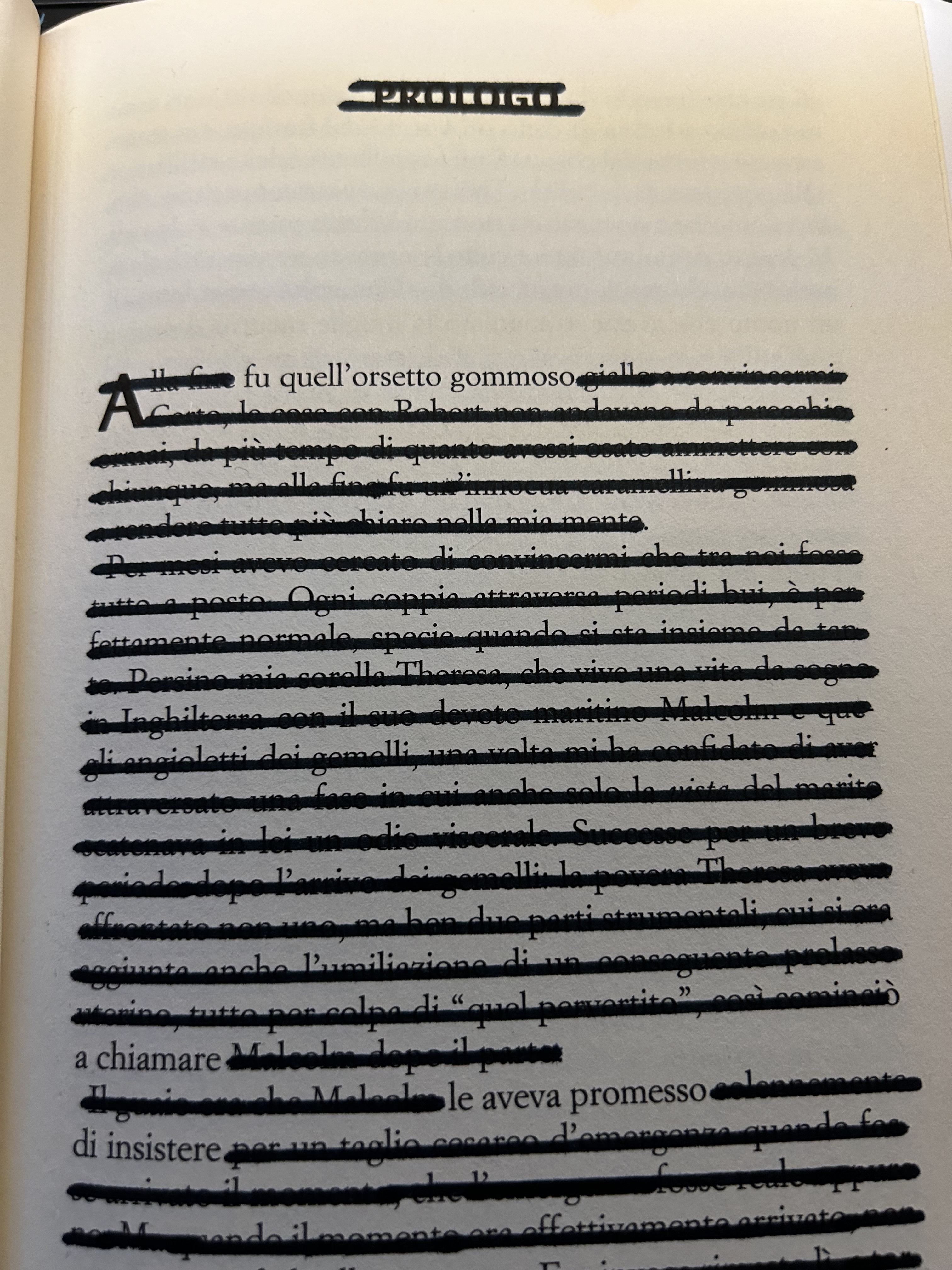
Il caviardage è un esercizio di scrittura creativa che coinvolge la selezione mirata e la cancellazione di parole o frasi da un testo scritto esistente, come un libro, una poesia o un articolo.
L’obiettivo principale del caviardage è trasformare il testo originale in qualcosa di nuovo e significativo, spesso creando una nuova opera poetica o narrativa. Questa pratica poetica e artistica è nata come una forma di sperimentazione letteraria, in cui gli autori rimuovono parti del testo originale per rivelare nuovi significati o sottolineare concetti specifici. Il caviardage sfida le convenzioni tradizionali della scrittura e invita gli artisti a esplorare la creatività attraverso la manipolazione del linguaggio e della struttura del testo.
È un modo intrigante per esplorare la reinterpretazione e la trasformazione dei testi esistenti.
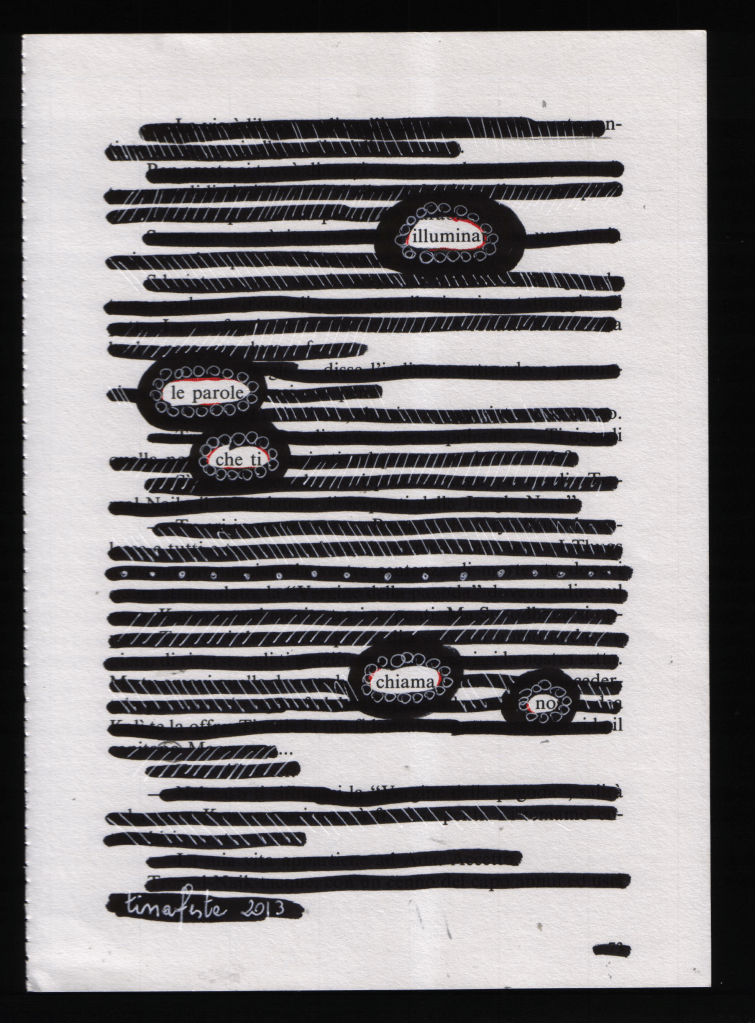
Lavoro realizzato con Metodo Caviardage – Tina Festa – 28 giugno 2013
L’uso del caviardage come tecnica letteraria è stato promosso da autori come Tristan Tzara, uno dei fondatori del Dadaismo, e André Breton, il principale teorico del Surrealismo. Questi artisti erano noti per sperimentare con nuovi modi di creare e interpretare il testo, inclusi metodi come la scrittura automatica e il caviardage.
Quindi, il caviardage come tecnica letteraria ha le sue radici in queste avanguardie del XX secolo, ma è continuato a essere esplorato e utilizzato da autori e artisti contemporanei.
Ma ora che abbiamo capito di coa si tratta, quali step devo seguire per sperimentare l’arte del caviardage?
Comincia scegliendo un libro! La scelta del libro per il caviardage è una decisione personale che dipende dai tuoi interessi e dalla tua preferenza. Tuttavia, ecco alcuni suggerimenti per aiutarti a scegliere un libro adatto:
Un libro che conosci bene: Scegli un libro che hai letto più volte o conosci molto bene. Questo ti permetterà di avere familiarità con il testo originale e ti aiuterà a selezionare parole in modo più efficace.
Un libro che ti ispira: Seleziona un libro che ti ispira o che ti è particolarmente caro. Potresti essere più motivato a lavorare con un testo che ti emoziona.
Un libro con un testo ricco: Scegli un libro che abbia un testo ricco di parole e frasi interessanti. Questo renderà il processo di selezione delle parole più interessante e stimolante.
Un libro di pubblico dominio: Considera la possibilità di scegliere un libro di pubblico dominio, come opere classiche, che possono essere utilizzate liberamente senza problemi di copyright.
Un libro con una trama semplice: Se preferisci concentrarti sulle parole piuttosto che sulla trama, potresti optare per un libro con una trama più semplice o lineare. In questo modo, potrai concentrarti maggiormente sulla selezione delle parole.
Un libro che ami rileggere: Se pensi di voler rileggere il libro caviardato, scegli un testo che ti piaccia molto. Potresti scoprire nuovi significati nel testo originale attraverso il processo di caviardage.
Un libro nella tua lingua preferita: Se stai facendo il caviardage in una lingua diversa dalla tua lingua madre, potresti preferire un libro scritto nella tua lingua preferita per avere una migliore comprensione del testo originale.
In generale, il libro che scegli dovrebbe ispirarti e offrirti abbastanza materiale da selezionare e caviardare in modo creativo. Ricorda che il caviardage è un esercizio di creatività e interpretazione, quindi divertiti nel fare la tua scelta e se vuoi creare poesie a tema naturalistico o romantico… non scegliere un libro di algebra!
Il processo di caviardage coinvolge diverse fasi operative:
Selezione del Testo: Inizialmente, si seleziona un testo di partenza, che può essere un libro, una poesia, un articolo o qualsiasi altra forma di scrittura. Questo testo servirà da base per il processo di caviardage.
Analisi del Testo: Si legge attentamente il testo di partenza per comprenderne il contenuto e le tematiche. Questa analisi aiuta a identificare le parole, le frasi o le sezioni che si desidera evidenziare, modificare o eliminare.
Selezione delle Parole o Frasi: Si scelgono le parole o le frasi specifiche da evidenziare o da eliminare. Questa selezione può essere basata su criteri tematici, stilistici o creativi, a seconda degli obiettivi dell’artista.
Cancellazione o Evidenziazione: Si procede quindi a cancellare fisicamente le parole o le frasi selezionate dal testo originale oppure si evidenziano in modo visivo o attraverso altro mezzo, a seconda del medium utilizzato (carta, computer, ecc.).
Creazione della Nuova Opera: Dopo aver apportato le modifiche desiderate al testo originale, si considera il risultato come una nuova opera.
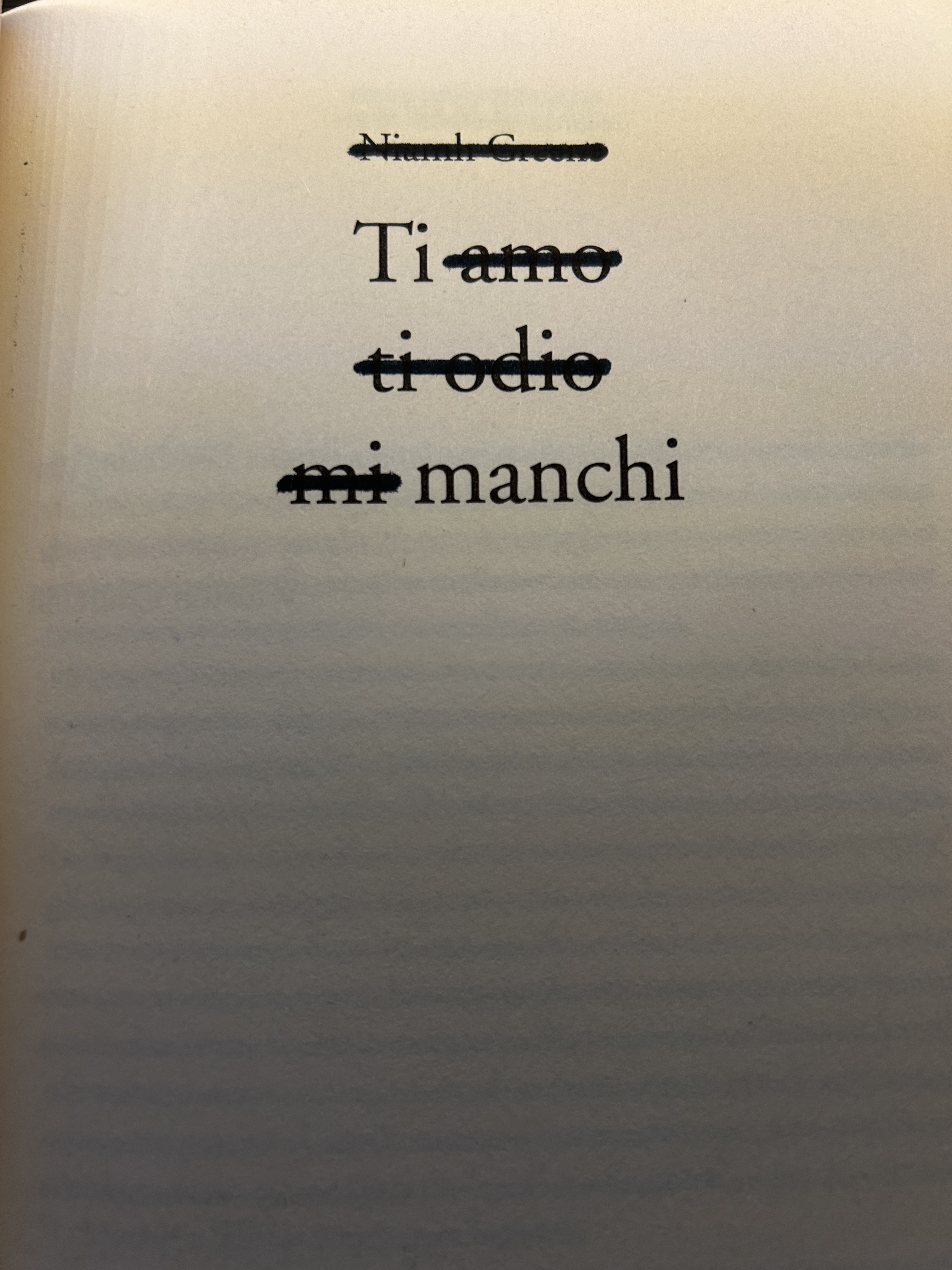
Esempi personali di Caviardage:
Immaginando di chiedere a Emily come approccerebbe questo stile poetico lei ci potrebbe dire:
Se stessi considerando il caviardage come veicolo per il mio stile poetico personale, inizierei con l’amore per la brevità e la suggestione che caratterizzano le mie poesie. Potrei selezionare i versi di un autore classico o un componimento celebre e, con un tocco personale, cancellare o evidenziare le parole che catturano il mio pensiero o il mio stato d’animo del momento.Questo processo di “taglio e cucito” delle parole darebbe vita a una nuova poesia, dove i vuoti e le parti evidenziate conterebbero tanto quanto le parole stesse. Il caviardage sarebbe il mio strumento per esplorare il potere dell’ellissi e dell’immaginazione del lettore, invitandolo a completare le frasi in modo unico e personale. In questo modo, ogni lettore diventerebbe parte integrante della mia poesia, unendo le proprie emozioni e interpretazioni alla mia espressione poetica.
In conclusione, il caviardage rappresenta un’affascinante forma di espressione poetica in cui le parole diventano tessere di un mosaico letterario, un puzzle che il lettore è invitato a completare con la sua immaginazione. Come Emily Dickinson avrebbe potuto sottolineare, questa tecnica è un riflesso dell’arte poetica stessa, in cui la brevità e la suggestione possono rivelare profonde verità interiori. Il caviardage ci invita a esplorare nuovi mondi di significato nelle parole altrui, e nello stesso tempo, a plasmare il testo secondo la nostra visione personale. È un connubio di creatività condivisa tra autore e lettore, una danza poetica in cui ogni passo è un’opportunità per rivelare la bellezza e la complessità delle parole e delle emozioni umane.
Con questa decima puntata il nostro affascinante viaggio nel mondo della poesia sta giungendo alla sua ultima tappa. Non perdete l’episodio finale, dove discuteremo di tempi, modi, spazi poetici, ma anche di come gestire il backup delle nostre opere, insomma di tutto un po’. Sarà un’esperienza da non mancare, un’ultima occasione per immergersi nella bellezza delle parole e delle emozioni. Vi aspetto per concludere questo straordinario viaggio insieme, con la gratitudine di avervi avuto come compagni di questo meraviglioso viaggio nella poesia.
Ciao, nell’ottava lezione abbiamo esplorato la valenza narrativa di alcune poesie. Ci è parso di attraversare sentieri di immagini evocative e di udire nel solcarli echi di storie incredibili.
Oggi, non senza emozione andremo a toccare uno dei temi che più mi risulta caro, scolasticamente parlando, della poesia.
Attraverseremo insieme infatti la poesia “comico-realistica” detta anche “poesia giocosa”.
La storia di questo genere poetico scorre, per l’Italia praticamente di pari passo al “Dolce Stilnovo” nella seconda metà del 1200 e fonda la sua potenza espressiva su un umorismo ironico che si traduceva in critiche alla società o alle convenzioni tradizionali.
Uno degli esponenti più emblematici fu Cecco Angiolieri da Siena, il quale nella celeberrima «S’i’ fosse foco, arderei ‘l mondo» lancia i suoi strali poetici verso il Mondo. Eccola a voi da leggere:
S’i’ fosse foco, arderei ’l mondo; s’i’ fosse vento, lo tempesterei; s’i’ fosse acqua, i’ l’annegherei; s’i’ fosse Dio, mandereil’en profondo;
s’i’ fosse papa, sare’ allor giocondo, ché tutti cristïani imbrigherei; s’i’ fosse ’mperator, sa’ che farei? A tutti mozzarei lo capo a tondo.
S’i’ fosse morte, andarei da mio padre; s’i’ fosse vita, fuggirei da lui: similemente farìa da mi’ madre.
S’i’ fosse Cecco, com’i’ sono e fui, torrei le donne giovani e leggiadre: e vecchie e laide lasserei altrui.
Cecco Angiolieri
Si tratta di un sonettotosto e crudo in cui l’autore non manca di esprimere critiche e reprimende verso ogni cosa, senza risparmiare nemmeno la famiglia, rea a suo parere, di non concedergli sufficiente denaro per i suoi vizi.
Nonostante i temi assai fuori contesto per la poesiatradizionale, il testo per struttura e scelta lessicale esprime chiaramente il sentimento dell’autore e, nella sua particolarità, ci trascina in tutto il suo folle biasimo verso il suo universo.
In conclusione, il sonetto ‘S’i’ fosse foco, arderei ’l mondo’ di Cecco Angiolieri si distingue come un esempio straordinario di poesia comico-realistica italiana. Con la sua ferma critica nei confronti del mondo e della società, Angiolieri ha creato un’opera che sfida le convenzioni poetiche dell’epoca, utilizzando un linguaggio audace e diretto per esprimere il suo disprezzo per il mondo che lo circonda. Questo sonetto ci offre uno sguardo affascinante nella mente di un poeta ribelle e ci ricorda che la poesia può essere uno strumento potente per esprimere emozioni intense e opinioni audaci.
E ora spostiamoci di qualche secolo innanzi introducendo Francesco Berni, anche lui Toscano, ma della provincia di Pistoia. E’ stato uno scrittore, poeta e drammaturgo nato alla fine del 1400.
Ecco un estratto dalle sue Rime:
Ad ogni modo, Amor, tu hai del matto, e credi a me, se tu non fussi cieco, io te farei veder ciò che m’hai fatto.
Or se costei l’ha finalmente meco, questa rinegataccia della Mea, di grazia, fa ancor ch’io l’abbia seco;
poi che tu hai disposto ch’io la bea, se la mi fugge, ch’io le sia nemico, e sia turco io, s’ella è ancor giudea;
altrimenti, Cupido, io te lo dico in presenza di questi testimoni, pensa ch’io t’abbia ad esser poco amico;
LXX. Capitolo in lamentazion d’amore (31-42) Francesco Berni
In questi versi, Berni sta rivolgendo parole a Cupido (Amor) e sta esprimendo un profondo senso di delusione e rabbia nei confronti dell’amore. Sta sottolineando quanto l’amore sia irrazionale e cieco, poiché Cupido sembra non comprendere l’effetto devastante che ha avuto sulla sua vita.
Berni fa notare che, se l’amore (Cupido) fosse in grado di vedere chiaramente ciò che ha causato nella vita dell’autore, allora capirebbe quanto sia stato dannoso. L’autore sostiene che, se l’amore gli restituisse finalmente l’amata (probabilmente una donna che l’ha respinto o abbandonato), allora potrebbe considerare di essere in pace con lui.
Tuttavia, se la donna rifiuta ancora l’autore, Berni minaccia di diventare il suo nemico e si riferisce a se stesso come “turco” (un termine utilizzato in modo figurato per indicare qualcuno che è ostile o contrario a qualcos’altro) e alla donna come “giudea” (indicando una persona appartenente a una religione diversa, quindi estranea).
In sintesi, Berni sta criticando l’irrazionalità dell’amore e sta esprimendo il suo desiderio di riavere la donna amata, ma minaccia di diventare il suo nemico se lei continuerà a rifiutarlo.
Dopo aver esplorato il tagliente sarcasmo di Cecco e le audaci critiche di Francesco nella poesia giocosa, ci addentreremo ora nell’affascinante mondo di Giovanni Pascoli. Se Angiolieri e Berni affrontavano la realtà con un pizzico di irriverenza, Pascoli, che è un autore della seconda metà del 1800, ci sorprenderà con la sua abilità di trasformare la vita quotidiana in piccoli capolavori poetici attraverso la sua poetica giocosa e realistica. Preparatevi a immergervi nel mondo dei dettagli e delle emozioni nascoste che Pascoli sapeva rivelare così abilmente.
Al cader delle foglie, alla massaia non piange il vecchio cor, come a noi grami: che d’arguti galletti ha piena l’aia;
e spessi nella pace del mattino delle utili galline ode i richiami: zeppo il granaio; il vin canta nel tino.
Cantano a sera intorno a lei stornelli le fiorenti ragazze occhi pensosi, mentre il granturco sfogliano, e i monelli ruzzano nei cartocci strepitosi.
Giovanni Pascoli, Myricae, l’ultima passeggiata, Galline (1891).
Pascoli, noto per il suo approccio realistico alla poesia, qui dipinge un quadro apparentementeidilliaco della vita rurale, con la massaia che non piange il passare del tempo poiché è circondata da galletti, galline e vino. Tuttavia, c’è un sottofondo di sarcasmo in questa descrizione.
La satira emerge quando Pascoli suggerisce che la vita di campagna, pur apparendo tranquilla e felice, potrebbe essere monotona e banale. L’abbondanza di galletti nell’aia e le ragazze occupate a sfogliare il granturco possono essere visti come simboli di una routine ripetitiva. Inoltre, l’immagine del vino che “canta nel tino” potrebbe alludere all’idea che il comfort e la tranquillità possono portare all’apatia e alla mancanza di aspirazioni più profonde.
In questo modo, vengono messi in discussione l’idealizzazione della vita rurale, suggerendo che anche dietro l’apparenza di serenità ci possono essere sfumature di noia e insoddisfazione. La sua satira risiede nel fatto che, mentre sembra celebrare la vita di campagna, in realtà solleva domande sul suo significato più profondo e sulla vera qualità della vita che offre.
In pratica, la sua grandezza sta nel celebrare all’apparenza un mondo che in realtà vede sotto un’ottica differente.
Se ora dovessimo immaginare cosa ci direbbe Emily, sono convinto che la sentiremmo dire: “Nelle sfumature delle loro parole, Pascoli, Angiolieri e Berni ci conducono in mondi diversi, dove la gioia, il dolore, il sarcasmo e l’ironia danzano insieme. Attraverso le loro liriche, rivelano la vita nella sua complessità, celando verità sotto le maschere dell’apparenza. Come poeti maestri dei loro tempi, ci insegnano che la poesia può essere un riflesso fedele di umanità, rivelando la bellezza e la follia che intrecciano il nostro vivere”.
Abbiamo visto come questi maestri dell’arte poetica abbiano utilizzato l’ironia, il sarcasmo e l’umorismo per dipingere ritratti vividi e spesso caustici della società e della natura umana. La loro abilità nell’analizzare e criticare la realtà attraverso versi giocosi e satirici ci ha dimostrato che la poesia può essere molto più di un semplice veicolo per l’espressione personale; può anche essere un potente strumento di critica sociale e culturale.
La satira poetica ci invita a guardare oltre le apparenze e a esplorare i lati oscuri e spesso comici della nostra esistenza. Ci sfida a riflettere sulle contraddizioni della società e a ridefinire le nostre prospettive. In un mondo in cui le parole hanno il potere di cambiare la nostra percezione della realtà, la poesia satirica si erge come una voce critica che ci spinge a mettere in discussione le convenzioni e a guardare il mondo con occhi nuovi.
Dunque, cari Poeti e Poetesse che state leggendo, non dimenticatevi mai che non esiste rima o emozione che poesia non possa descrivere e raccontare. Non limitatevi a ciò che già conoscete, ma assaporate il brivido di qualcosa di così nuovo da poter risultare ardito cimento al solo pensarlo.
Ci vediamo alla prossima lezione, un piccolo bonus aggiunto in corsa, si tratta di…
Ciao, nella settima lezione abbiamo esplorato le emozioni che può suscitare o raccontare un testo poetico. In quell’ottica ci siam permessi di scomodare Dante, la Browning e, la solita, Emily Dickinson.
Oggi scopriremo invece come una poesia possa essere il veicolo non delle sole emozioni, ma anche una vera e propria forma di narrazione, densa, compatta ed evocativa.
I mezzi con cui un testo può diventare tale sono pochi e semplici: immagini e linguaggio poetico.
Un esempio clamoroso di quest’arte ce lo regala Giacomo Leopardi, con la famosissima “Il Sabato del Villaggio” da cui traggo gli otto versi che seguono:
… Siede con le vicine Su la scala a filar la vecchierella, Incontro là dove si perde il giorno; E novellando vien del suo buon tempo, Quando ai dì della festa ella si ornava, Ed ancor sana e snella Solea danzar la sera intra di quei Ch’ebbe compagni dell’età più bella. … (opera completa)
Ci sono bellezza, unicità, storie ed intrecci in questa poesia, in cui, Leopardi ci porta direttamente dentro il borgo, ce ne fa sentire il profumo ed il cicaleccio, toccando corde interiori profondissime in chi ha la fortuna di poterlo “osservare” leggendolo.
La “Vecchierella su la scala”, “quando si ornava o danzava” sono tutte parole che si muovono dentro le scene edotte dall’autore.
Uno dei grandi segreti deiPoeti che si trasformano in narratori è la struttura narrativa composta alla stessa maniera di quella di una storia, cioè: Introduzione, sviluppo e conclusione.
Ma veniamo a qualche altro esempio che possa illuminare la nostra rotta di poeti, cito ad esempio il frammento di una poesia di Dylan Thomas autore Gallese della prima metà del 1900:
Sognai la mia genesi
Sognai la mia genesi nel sudore del sonno, bucando Il guscio rotante, potente come il muscolo D’un motore sul trapano, inoltrandomi Nella visione e nel trave del nervo. Da membra fatte a misura del verme sbarazzato Dalla carne grinzosa, limato Da tutti i ferri dell’erba,metallo Di soli nella notte che gli uomini fonde….
(da Poesie nella stanza)
In sintesi, questo frammento di poesia narrativa è un’opportunità per esplorare il modo in cui un poeta può raccontare una storia o rappresentare un processo attraverso l’uso di immagini e linguaggio poetico. È un passo che richiede una lettura attenta e un’analisi delle sue componenti chiave per coglierne appieno il significato e l’emozione. Si noti anche come il “filo rosso” della scelta di linguaggio crei una climax che ci trascina sempre più nel profondo di questa narrazione poetica.
I capisaldi di quanto letto sono:
Uso di un linguaggio descrittivo
Uso di immagini vivide e metafore
Viene descritta la nascita di una identità dai contorni misteriosi ed eterei
Veniamo lasciati con delle domande aperte a livello interiore.
Ed ora, visto che siamo carichi andiamo a vedere un altro esempio, più agreste e blando nel linguaggio, ma, di certo, non meno vivido e intenso.
Nessun rumore accanto al bosco, solo la lunga falce sussurrava al suolo. Sussurrava che cosa? Va’ a saperlo; riguardava magari il sole caldo, o forse invece l’assenza di rumore – ecco perché sussurri e non parole. Non era il dono in sogno di ore oziose né l’oro alla portata di elfi o fate: ogni aggiunta alla verità suonava fioca al serio amore che allineava i fossi, incluse lievi spighe di fiori (pallide orchis) e impauriva un serpe verde lucido. Il reale è il dolce sogno del lavoro. Lei sussurrava, lasciando il fieno a farsi.
Come anticipato non cambia la forza, ma solo il “tono” della narrazione. Ci troviamo dapprima a schivare la falce che fischia sfiorando il suolo e poi ci stupiamo del silenzio, immersi in un’atmosfera onirica con elfi e fate, interrotta solamente da una silenziosa serpe.
Sono convinto che in tutti i versi citati voi tutti leggendo abbiate visto quanto i poeti hanno dipinto con le loro parole. La trovo una sensazione bellissima.
I poeti utilizzano immagini vivide, metafore e linguaggio evocativo per rendere le loro narrazioni poetiche coinvolgenti. L’uso delle parole può creare un’atmosfera unica, suscitando emozioni nei lettori.
In questa lezione, abbiamo esplorato l’arte della narrazione nella poesia. Abbiamo visto come la poesia può essere un veicolo straordinario per raccontare storie brevi, ma incredibilmente evocative. Attraverso l’uso di linguaggio poetico, immagini vivide e metafore, i poeti possono trasportare i lettori in mondi completamente nuovi e farli immergere in emozioni profonde. L’importanza di questa combinazione unica di narrazione e poesia risiede nella sua capacità di catturare momenti e storie in modo potente ed espressivo.
Vi incoraggio a esplorare ulteriormente la narrazione nella vostra scrittura poetica. Siate audaci nelle vostre immagini, abbracciate le storie che brulicano nella vostra mente e trasformatele in versi che catturino l’immaginazione. La narrazione poetica offre infinite opportunità creative, e vi invito a scoprire il potenziale delle vostre parole per creare mondi e storie uniche. Nella prossima lezione, esploreremo ulteriormente come la poesia può diventare una forma di narrazione fortissima ed anche irriverente, parleremo infatti di Poesia Satirica.
Ma prima di salutarci, concedo a Emily lo spazio per narrarci in poche righe le sue idee su questo tema:
Lei ci direbbe: Nel mistero delle parole tessute, La narrazione poetica si svela, Storie brevi, emozioni evocate, nuova luce.